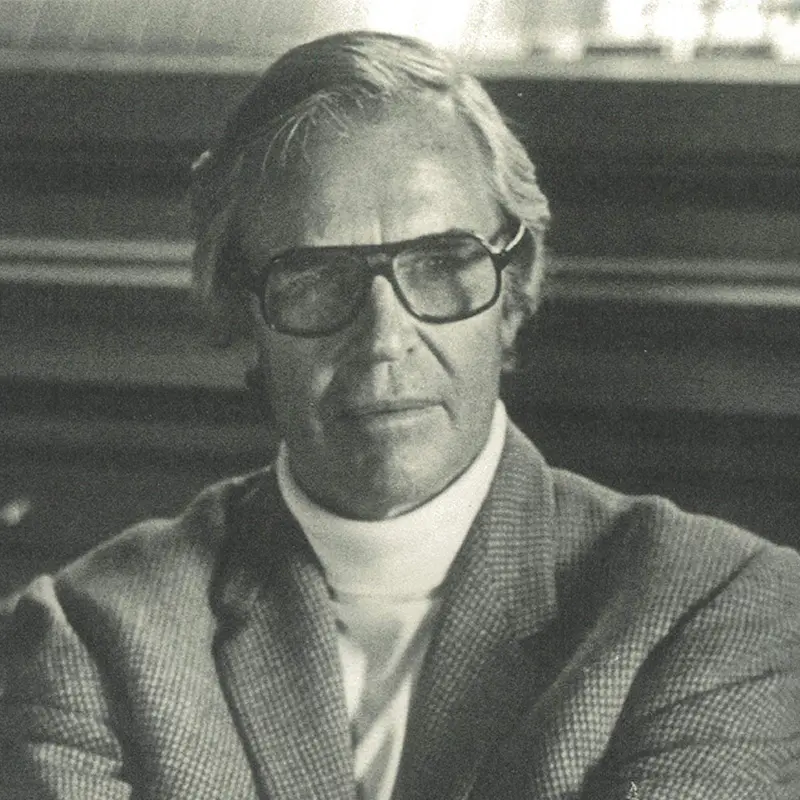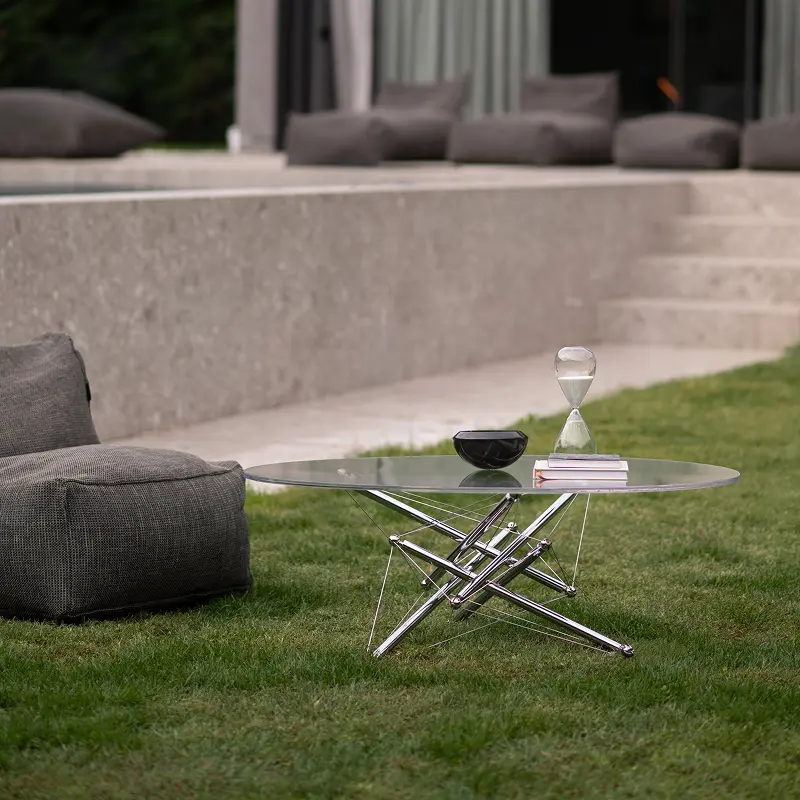
Rooted in Theodore Waddell’s early research into tensile structures, dating back to 1956, the Tensegrity Table challenges conventional notions of support and stability.
Inspired by the structural principles explored by Buckminster Fuller, Waddell developed an innovative configuration in which tension and compression work together to create a remarkably lightweight yet stable structure.
Six slender metal legs form a dynamic, sculptural composition: three support the glass tabletop without touching the floor, while the remaining three rest on the ground without reaching the tabletop. None of the legs touches another. Instead, a precisely balanced network of tensioned steel cables holds the entire structure together.
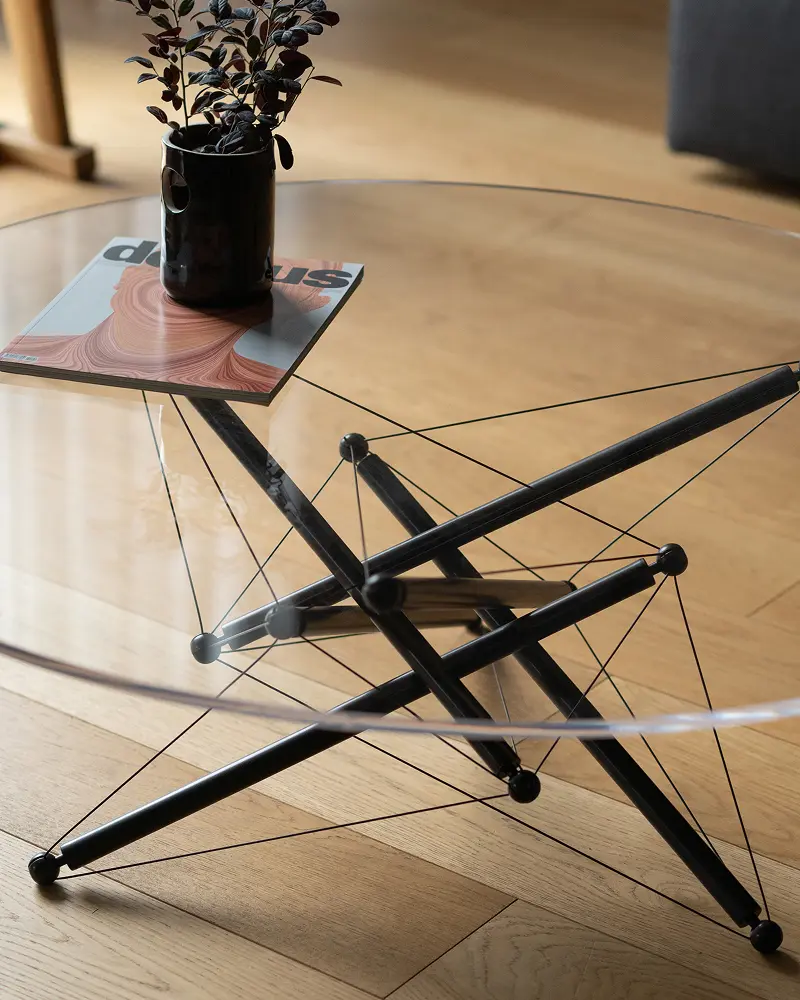
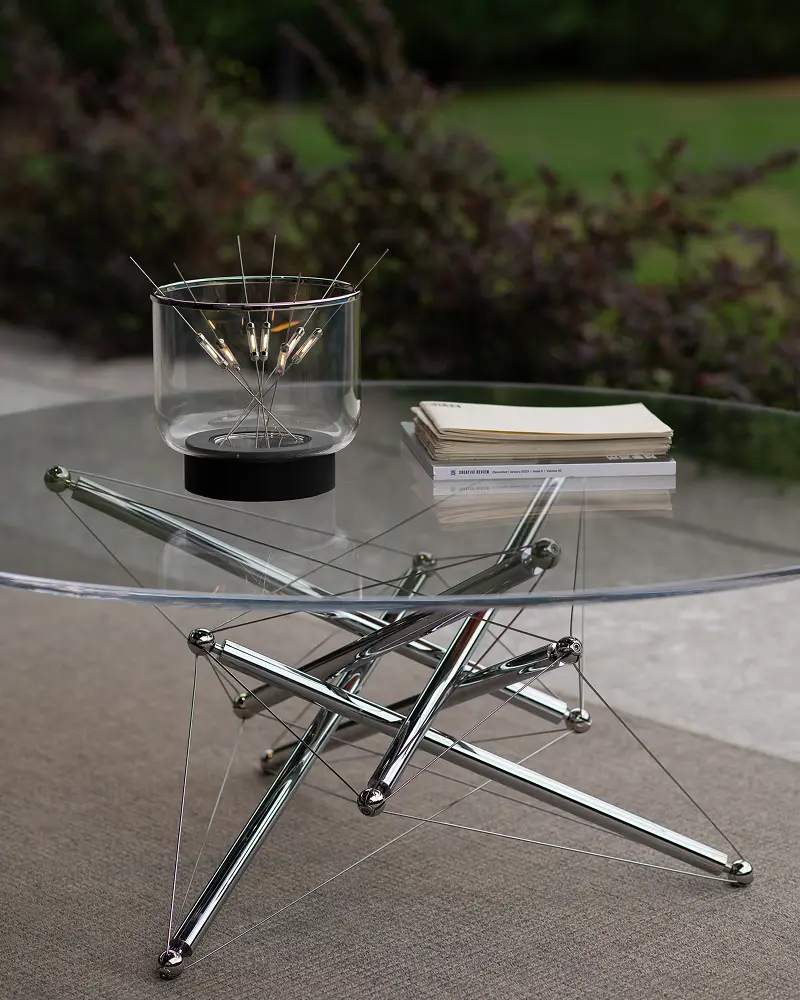
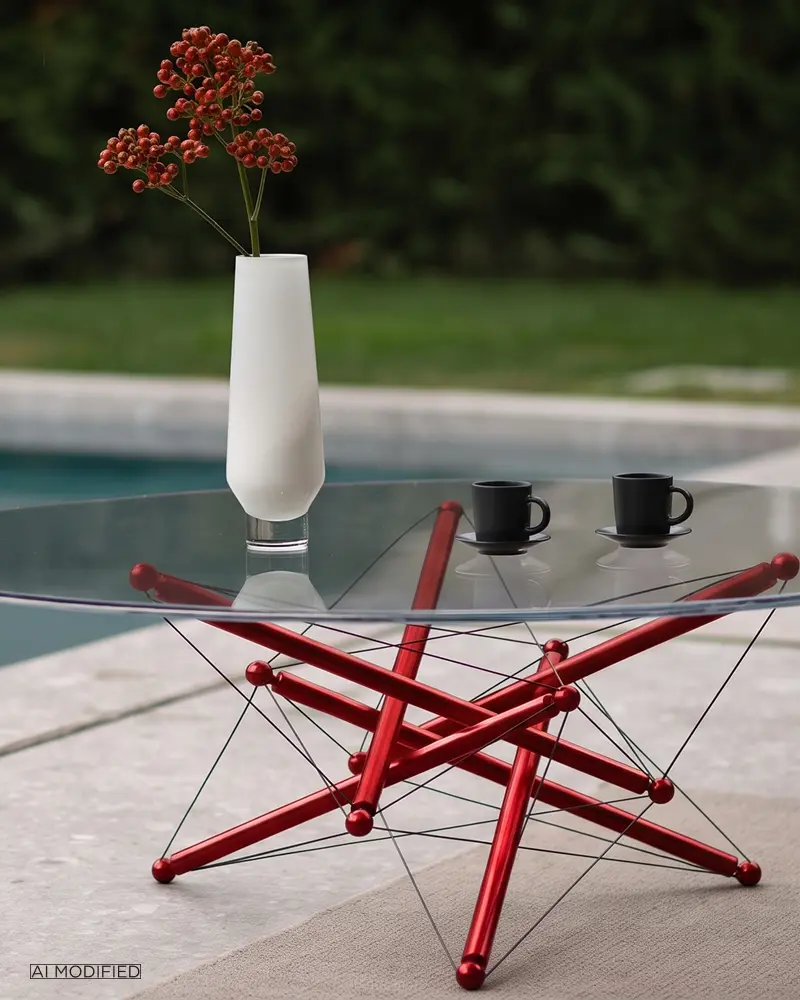
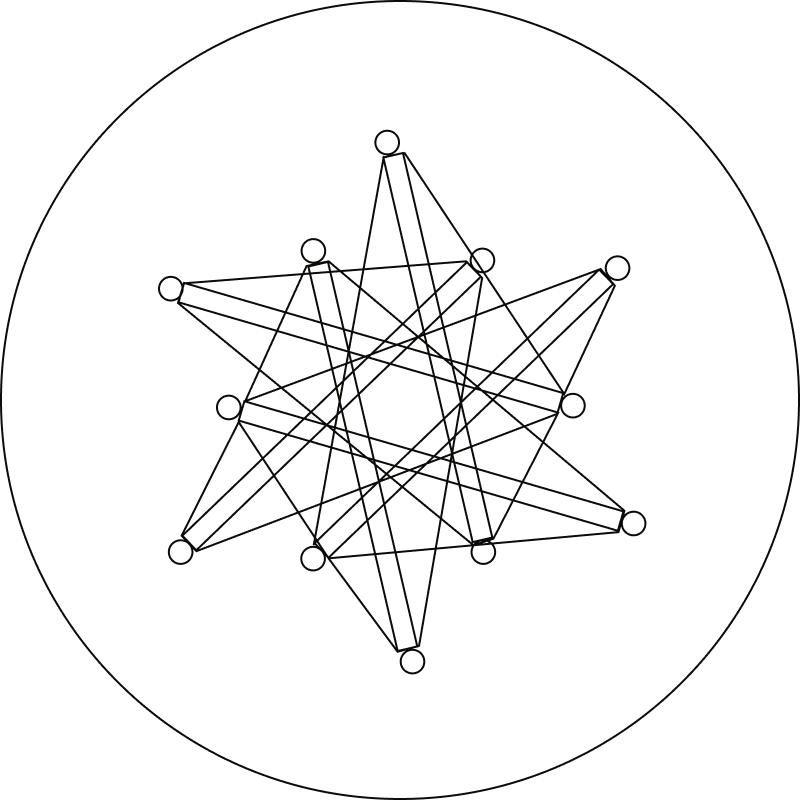
Six slender metal legs connected by a tensioned steel cable network support a circular glass tabletop through a tensegrity structure
Circular
Available in two heights: coffee table and dining table
Glass tabletop and painted metal structure
Available in seven colour finishes: Black Knight, Silver Streak, Diablo, Sub Zero, Solar Flare, Kinetic Mint, and Helios
Developed in 1972, the table represents a pioneering application of tensegrity principles to furniture design. Its distinctive starburst configuration, conceived independently by Waddell, transforms a complex structural system into an elegant expression of lightness and equilibrium.